
How Journaling Helps You Let Go Emotionally (And Why It Actually Works)
Letting go sounds simple in theory, but in reality it’s one of the hardest emotional processes. Thoughts loop, memories resurface, and unresolved feelings can quietly shape your mood, focus, and even your physical energy.
That’s where journaling becomes powerful — not as a trend, but as a practical tool for emotional processing.
This article explains why journaling helps you let go, how it affects your mind, and how to start a simple routine that creates real emotional relief.
Why It’s So Hard to Let Go
Most people don’t hold on because they want to.
They hold on because their brain hasn’t fully processed the experience.
When something emotional happens, your mind tries to:
• Make sense of it
• Protect you from repeating it
• Keep revisiting it for closure
If that processing never completes, the thought keeps returning.
This is why you can “decide” to move on but still feel stuck.
How Journaling Helps the Brain Release Emotions
Journaling works because it moves thoughts from mental loops → structured processing.
1️⃣ It Externalizes Your Thoughts
When feelings stay in your head, they feel overwhelming.
Writing them down creates distance and clarity.
You’re no longer carrying the emotion — you’re observing it.
2️⃣ It Reduces Mental Overload
Your brain doesn’t need to keep replaying something once it’s been expressed.
This lowers:
• Rumination
• Anxiety
• Emotional tension
3️⃣ It Creates Meaning
Writing helps you connect experiences with lessons, which is how the brain reaches closure.
Without meaning, the mind keeps searching.
4️⃣ It Builds Emotional Awareness
Journaling helps you recognize patterns:
• What triggers you
• What you’re avoiding
• What you actually need
Awareness is the first step to letting go.
Proven Benefits of Emotional Journaling
People who journal consistently often report:
• Better sleep
• Reduced stress
• Improved mood regulation
• More mental clarity
• Greater emotional resilience
Even 10 minutes a day can create noticeable change over time.
Why Guided Journals Work Better Than Blank Pages
A blank page can feel intimidating, especially when emotions are heavy.
Guided prompts help by:
• Giving direction
• Helping you go deeper
• Preventing avoidance
• Making the habit easier to maintain
Instead of wondering what to write, you focus on what you feel.
A Simple 10-Minute Letting Go Routine
You don’t need a long ritual. Try this:
1️⃣ Sit somewhere quiet
2️⃣ Take a slow breath
3️⃣ Answer one prompt honestly
4️⃣ Close the journal without overthinking
Consistency matters more than length.
Who Journaling Helps the Most
Journaling is especially helpful if you’re:
• Overthinking constantly
• Going through a life transition
• Healing from past experiences
• Feeling emotionally stuck
• Trying to regain clarity
It’s not about writing perfectly — it’s about processing honestly.
When Letting Go Starts to Happen
Letting go rarely feels like a single moment.
It feels like:
• Thinking about it less
• Feeling lighter
• Reacting differently
• Having more mental space
Small shifts compound over time.
A Tool to Help You Start
If you want structure instead of guessing what to write, a guided journal can make the process easier.
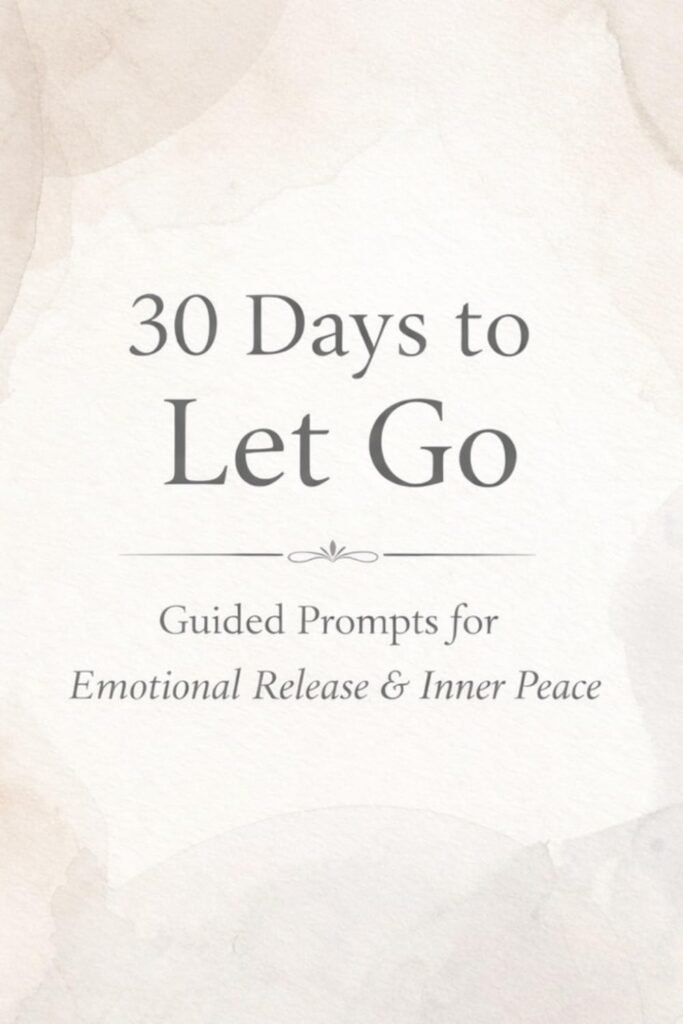
30 Days to Let Go was created to help you:
• Release emotional weight
• Reflect with purpose
• Build a daily reset habit
One prompt a day. One step closer to clarity.
👉 Start your letting-go journey today.
Conclusion
Letting go isn’t about forgetting — it’s about processing.
Journaling gives your mind a safe place to organize emotions, find meaning, and finally release what it no longer needs to carry.
Small daily reflection can lead to real emotional freedom over time.
👉 You might also find this helpful: How to Build a Simple Night Routine to Clear Your Mind