
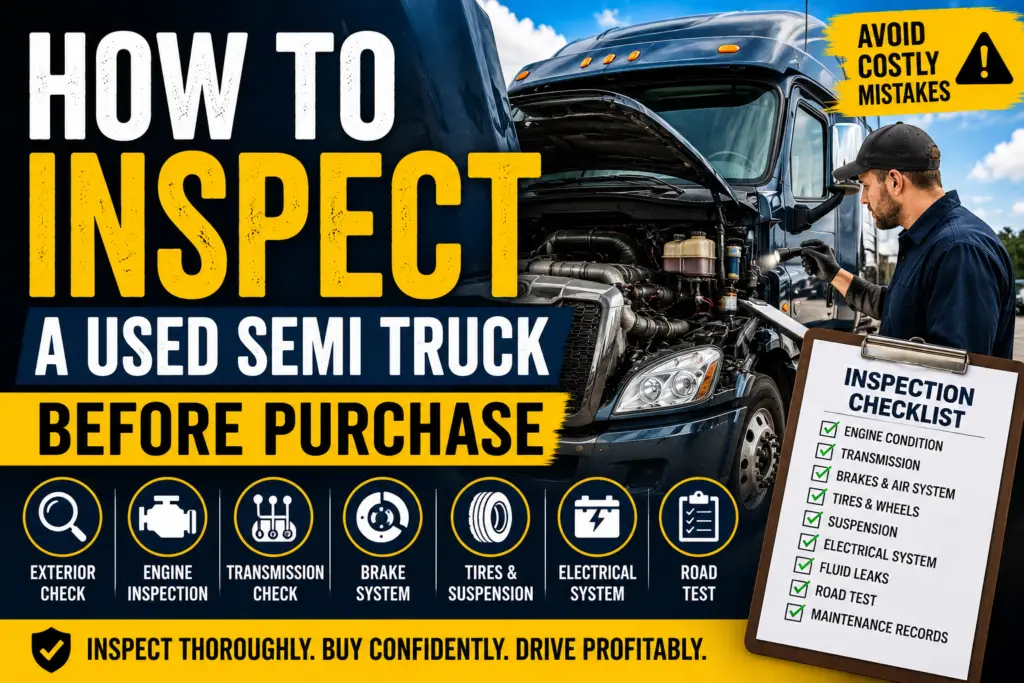
How to Inspect a Used Semi Truck Before Purchase
Buying a used semi truck can be a smart way to save money, but skipping a proper inspection can lead to expensive repairs, unexpected downtime, and lost revenue. Before signing any paperwork, take the time to perform a thorough inspection of the truck and document your findings.
Check out these other posts:
Common Red Flags When Buying a Used Semi Truck
10 Things to Check Before Buying a Used Semi Truck
7 Expensive Mistakes First-Time Semi Truck Buyers Make
Check out the Guide: Used Semi Truck Inspection Guide.
Start With the Exterior
Begin by walking around the truck and looking for obvious signs of damage.
Check for:
- Dents and body damage
- Rust and corrosion
- Signs of previous accidents
- Poor repair work
- Missing components
Pay close attention to the frame and mounting points. Structural issues can be costly to repair and may affect the truck’s safety.
Inspect the Engine
The engine is one of the most expensive components on the truck.
Look for:
- Oil leaks
- Coolant leaks
- Fuel leaks
- Excessive smoke
- Loose or damaged hoses
- Signs of poor maintenance
Check fluid levels and inspect belts for excessive wear or cracking.
Check the Transmission
Inspect the transmission area for leaks and damage.
During operation, watch for:
- Hard shifting
- Grinding
- Delayed engagement
- Slipping gears
Transmission repairs can easily cost thousands of dollars.
Examine the Brake System
A properly functioning brake system is critical.
Inspect:
- Brake drums or rotors
- Brake pads or shoes
- Air lines
- Air tanks
- Slack adjusters
Start the truck and verify that the air system builds pressure properly and maintains pressure without excessive leakage.
Inspect Tires and Wheels
Tires can reveal a lot about a truck’s condition.
Look for:
- Uneven wear patterns
- Low tread depth
- Sidewall damage
- Cuts and cracking
- Wheel damage
Multiple tire replacements can quickly add significant costs after purchase.
Check the Suspension
Inspect:
- Air bags
- Leaf springs
- Shocks
- Bushings
- Mounting brackets
Damaged suspension components may affect ride quality, handling, and tire wear.
Test Electrical Components
Verify that all electrical systems operate correctly.
Check:
- Headlights
- Turn signals
- Brake lights
- Dashboard gauges
- Warning lights
- HVAC controls
- Power accessories
Electrical issues can be difficult and expensive to diagnose.
Review Maintenance Records
Maintenance history often tells the real story of a truck.
Look for:
- Oil change records
- Major repairs
- Engine work
- Transmission service
- DOT inspections
Well-maintained trucks typically have documentation available.
Take a Road Test
Never purchase a used semi truck without driving it.
During the road test, evaluate:
- Steering response
- Braking performance
- Engine operation
- Transmission shifting
- Vibrations
- Unusual noises
Pay attention to anything that feels abnormal.
Document Everything
Take photos, make notes, and create a checklist during the inspection process. A systematic inspection can help you compare multiple trucks and make a more informed purchase decision.
Final Thoughts
A careful inspection can help identify hidden problems before they become expensive repairs. Spending an extra hour inspecting a truck may save thousands of dollars in future maintenance costs.
For a complete step-by-step inspection process and printable inspection checklist, visit our Used Semi Truck Inspection Guide:
Check out these other posts:
Common Red Flags When Buying a Used Semi Truck
10 Things to Check Before Buying a Used Semi Truck
7 Expensive Mistakes First-Time Semi Truck Buyers Make
Check out the Guide: Used Semi Truck Inspection Guide.