
Journaling for Writers: A Calm Way to Stay Creative and Focused
I’m not a perfect writer — just someone trying to stay consistent and creative while building things.
Writing doesn’t always need more rules, pressure, or productivity systems.
Sometimes what helps most is having a quiet place to think, reflect, and release what’s weighing on your mind.
That’s where journaling has helped me.
Be Safe Online – Use a VPN. I Use NORDVPN

Why Journaling Helps (Especially When Writing Feels Hard)
Journaling isn’t about writing well or producing something polished.
It’s about clearing mental and emotional noise so ideas have room to surface.
It can help with:
- Reducing overthinking and emotional clutter
- Getting unstuck before writing
- Creating calm before creative work
- Separating thinking from producing
Even a few minutes can make a difference.
A Simple Journaling Routine I Come Back To
When writing feels heavy or unfocused, this is what I do:
- Open the journal
- Write without an objective
- No editing, no fixing
- One page or less
- Stop when it feels complete
The goal isn’t output.
It’s clarity.
Journals That Help With Reflection and Focus
There’s no single “right” journal for everyone.
What matters is finding something that helps you slow down and think more clearly.
Here are a few options, depending on how you like to journal.
1. Minimalism Art Classic Notebook (Lined)
Good if you prefer complete freedom.
- No prompts
- No structure
- Just space to write whatever comes up
This works well for brain dumps and free writing.
2. The Five Minute Journal
Helpful if staring at a blank page feels intimidating.
- Light prompts
- Gentle structure
- Easier to stay consistent
This is a good option if you like a bit of direction.
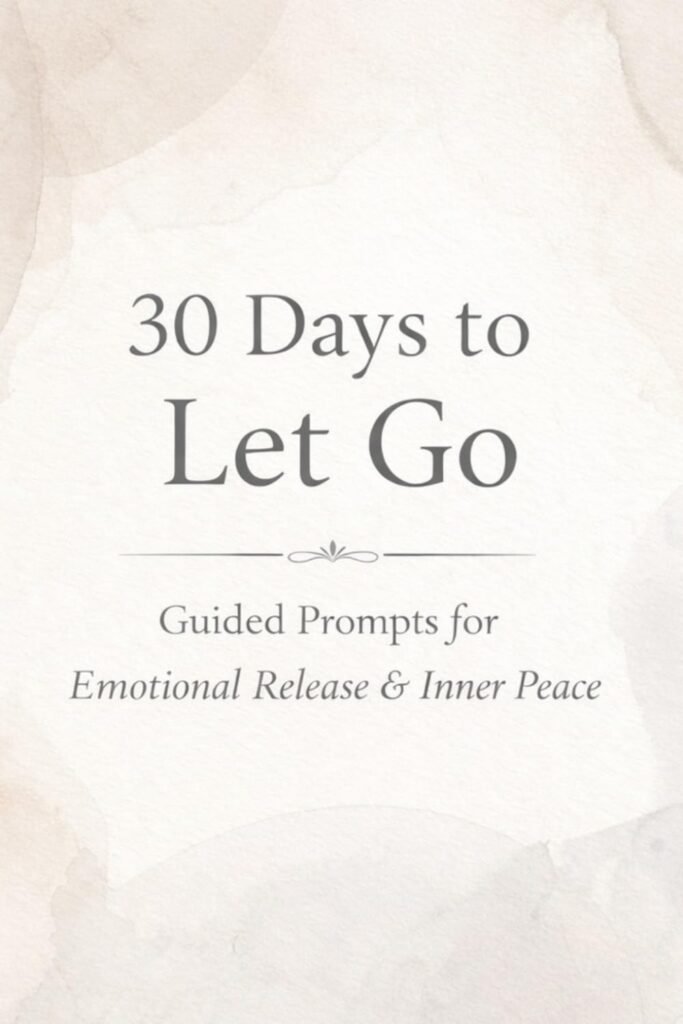
3. 30 Days To Let Go: Guided Prompts for Emotional Release & Inner Peace
This is a guided journal I personally use to help calm mental clutter, release emotional stress, and create mental clarity before sitting down to write or think through ideas. It’s not specifically a writer’s journal, but the quiet space it creates often makes writing and creative thinking easier.
Inside This Journal You’ll Find:
- 30 guided reflection prompts focused on emotional release
- Encouraging phrases to support healing and self-growth
- Spacious lined pages for deeper journaling
- A calm, structured daily reflection experience
- A gentle path toward inner peace and clarity
How Journaling Fits Into My Process
I usually journal:
- Before a writing session
- Or at night to unload thoughts
- Especially on days I don’t feel like writing at all
Often, journaling becomes the bridge back into creative work — without forcing it.
Final Thoughts
You don’t need to be an expert writer to benefit from journaling.
You just need space to think.
Journaling creates that space quietly, consistently, and without pressure.

Disclosure
Some links and banners in this post are affiliate links. I may earn a commission at no extra cost to you.
Pingback: Books That Help Writers Stay Focused and Calm - CodaAxis
Pingback: Best Books for Writing, Focus, and Creative Flow - CodaAxis
Pingback: Brown Noise for Overnight Sleep: Stay Asleep Longer