
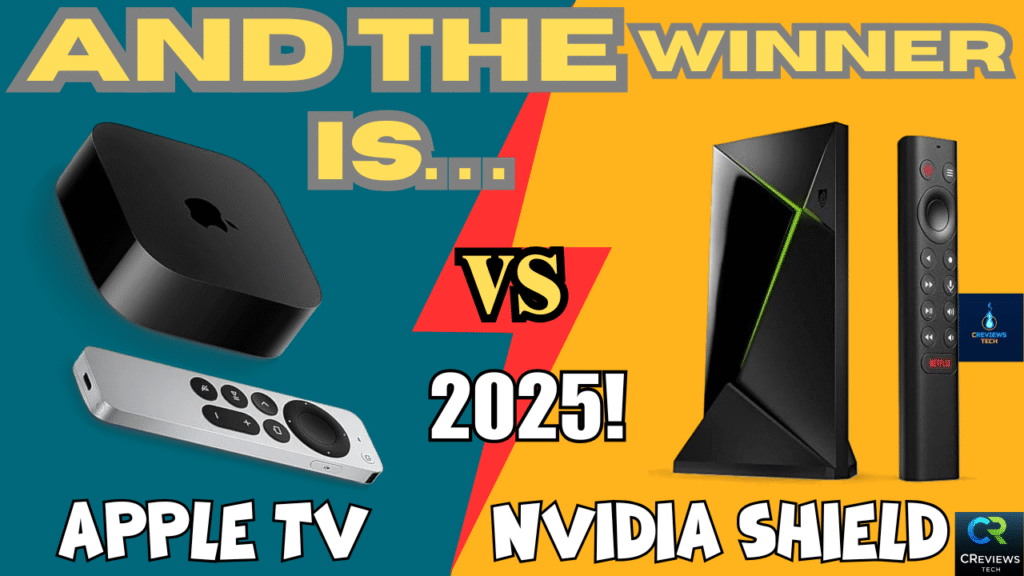
NVIDIA Shield TV Pro in 2025 — Still Worth It?
Full review & comparisons
(A blog post inspired by the YouTube video “NVIDIA Shield TV Pro in 2025 Still Worth It? Full Review & Comparisons” — watch the video for hands-on demos and benchmarks.)
If you’re asking the question I asked in my video — “Is the NVIDIA Shield TV Pro still worth buying in 2025?” — you’re not alone. The Shield has been the gold standard for enthusiasts for years: powerful hardware, Plex server features, AI upscaling, and excellent gaming/GeForce NOW support. But the streaming-device landscape has shifted a lot recently, with cheaper, modern streamers, new formats (AV1), and different update strategies from manufacturers. Below I break down what still makes the Shield shine, where it shows its age, and how it stacks up against alternatives in 2025 — plus a clear recommendation so you can decide fast.
I get commissions for purchases made through links in this post
— The quick answer
- Yes, the Shield is still worth it for power users who want Plex server features, better local-media/codec support, lossless-audio options, AI upscaling, and PC-streaming
- No, it’s not the best value for everyone — cheaper Google TV and Fire OS devices now offer modern codecs, more RAM/storage, and often better long-term update policies. If you only stream Netflix/Prime/YouTube and don’t need advanced features, you can save money elsewhere.
What still makes the Shield great in 2025
1. Raw performance & AI upscaling
The Shield Pro’s Tegra X1+ is still a very capable SoC for 4K playback and for features like NVIDIA’s AI-enhanced upscaling. If you care about buttery UI performance, local 4K media, and the option to run Plex or other server-type apps, Shield still shines.
2. Plex server and local media features
The Pro model’s extra RAM, USB ports, and server features make it ideal for people who host their own media libraries or want a home-theater PC-lite without a full PC. That expandability keeps it relevant for home media enthusiasts.
3. Gaming / GeForce NOW ecosystem
If you stream PC games with GeForce NOW or use Shield features for streaming games, the device still offers one of the best experiences for casual couch gaming.
Where the Shield shows its age (and why that matters)
1. The SoC is getting long in the tooth
The Tegra X1+ design dates back to the Switch-era family; it was excellent for its time but lacks some modern features hardware-level decoders in newer chips offer. That matters for newer streaming codecs and future-proofing.
2. Missing AV1 hardware support (important for streaming efficiency)
Many streaming services and platforms are moving toward AV1 to reduce bandwidth for 4K streams — newer devices increasingly include AV1 hardware decoding. The Shield’s lack of AV1 hardware makes it less efficient for some modern streams, especially as streaming services roll out more AV1 content. That’s one reason lower-cost streamers with AV1 support are attractive.
3. Update cadence & value for money concerns
Several reviewers in 2025 point out that the Shield’s software/update cadence and pricing make it harder to justify versus new alternatives that come with longer support guarantees or newer OS builds out of the box. If security updates and modern OS features are critical for you, factor that into your buy decision.
Head-to-head: Shield TV Pro vs popular 2025 alternatives
NVIDIA Shield TV Pro
- Strengths: AI upscaling, Plex/server features, strong gaming support, advanced audio formats, expansion ports. NVIDIA
- Weaknesses: No AV1 hardware, older SoC, pricier than many new streamers.
Google TV Streamer (and new Google/Onn devices)
- Strengths: Newer OS/SoC designs, often include AV1, better RAM/storage at the price point; Google’s new Streamer aims to replace Chromecast and bring a modern experience. For many mainstream users the Streamer or similar Google TV boxes are excellent value.
- Weaknesses: Less targeted at media-server enthusiasts and might lack some niche Shield-only features.
Budget Google TV / Android TV boxes (Onn, Mecool, etc.)
- Strengths: Excellent price-to-performance for simple streaming, many now support Dolby Vision/Dolby Atmos and AV1 in hardware.
- Weaknesses: Quality and update policy can vary across manufacturers.
Amazon Fire TV Cube / Fire OS devices
- Strengths: Tight Alexa integration, good streaming app support, often cheaper.
- Weaknesses: Fire OS is more Amazon-centric and sometimes lacks the flexibility/power of Shield for server or gaming-focused users.
Who should buy (and who should skip) the Shield in 2025?
Buy the Shield if:
- You run a Plex/media server, want expandability (USB ports), or host local media and need a stable, powerful device.
- You use GeForce NOW and want the best streaming/gaming integration from NVIDIA.
- You demand advanced audio formats or want NVIDIA’s AI upscaling for up-conversion.
Skip the Shield if:
- You only stream from Netflix/Prime/YouTube and want the best price-to-feature ratio — AV1-capable Google TV/Onn-style devices or Fire TV options likely give you everything you need for less.
- You want the absolute newest codec support and hardware-level features for futureproofing (AV1) and don’t need Shield-specific extras.
Practical buying tips (2025)
- Check for AV1: If your ISP data cap or bandwidth matters and you want the most efficient 4K streaming, prioritize devices with AV1 hardware decoding.
- Decide on expandability: If you want USB-attached storage or run a media server, Shield Pro’s ports and Plex features matter.
- Consider price and updates: Compare final after-rebate prices — in 2025 there are cheaper new devices with more modern SoCs and aggressive pricing, so shop around.
Final verdict (and how it ties to my video)
In my YouTube video I walked through real-world playback tests, UI snappiness, and a Plex server demo — and the conclusion matched the reporting by reviewers and hands-on testers in 2025: the Shield TV Pro is still excellent for enthusiasts, but it’s no longer the “one-size-fits-all” no-brainer it once was. If you need power, expandability, lossless audio, or NVIDIA gaming features, it’s still worth it. If you want the best value for straight-ahead streaming (and future codec coverage), look at newer AV1-capable Google TV and budget Android TV boxes.
Want the deep-dive (and hands-on demos)?
If you enjoyed this article, check out the full video for side-by-side playback footage, UI speed tests, Plex setup walkthrough, and real-time comparisons with a Google TV Streamer and an Onn 4K device — you’ll see exactly how the Shield behaves in everyday use. (Link to your video and timestamps here in your post for better engagement.)