Point of View Explained:
How to Choose the Best Perspective for Your Story
Have you ever started reading a novel and felt instantly connected to the main character? Or perhaps you’ve read a story where you seemed to know everything happening, even when the characters didn’t.
That experience isn’t an accident.
It’s the result of one of the most important decisions a writer makes before typing the first chapter: point of view.
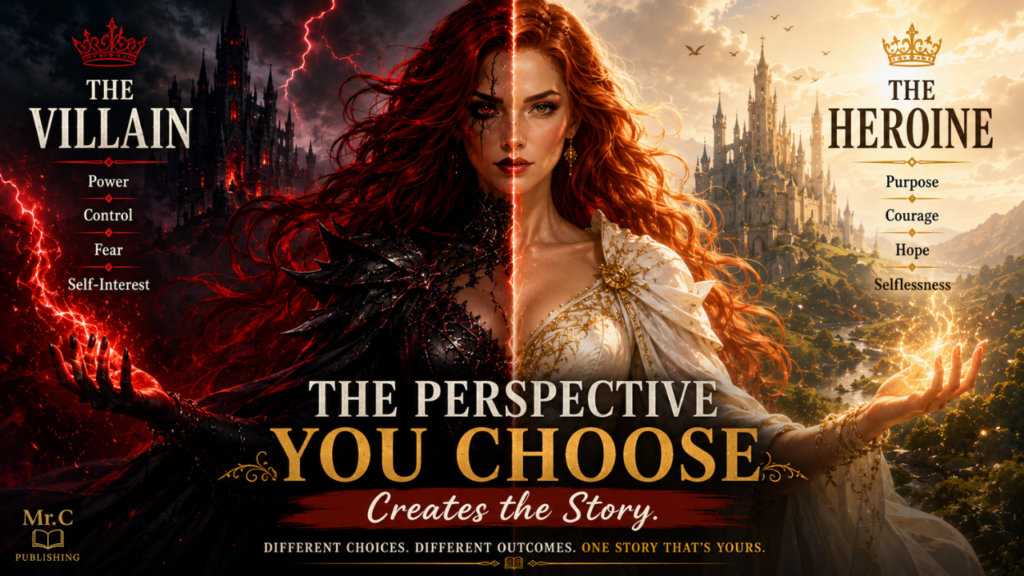
Point of view, often shortened to POV, determines who tells your story, what readers can see, and how emotionally connected they become to your characters. The exact same plot can feel intimate, mysterious, or epic simply because the perspective changes.
Choose the right point of view, and readers forget they’re reading.
Choose the wrong one, and even a great story can feel distant or confusing.
Let’s explore how each point of view works—and how to decide which is right for your story.
What Is Point of View?
Point of view is the perspective through which readers experience a story.
It controls:
- Who tells the story.
- What information readers receive.
- Which characters’ thoughts are revealed.
- How closely readers connect with the protagonist.
Think of point of view as the camera through which your audience watches the story unfold.
Move the camera, and the entire experience changes.
First-Person Point of View
First person uses I, me, and my.
Example:
I froze when I heard footsteps behind me. Running wasn’t an option anymore.
Readers experience every event through one character’s eyes.
Best for
- Character-driven novels
- Young adult fiction
- Memoirs
- Psychological thrillers
- Coming-of-age stories
Strengths
- Strong emotional connection.
- Distinct narrative voice.
- Easy for readers to empathize with the protagonist.
Limitations
Readers only know what the narrator knows.
This naturally creates mystery, but it also limits what can happen off-page.
Third-Person Limited
Third-person limited follows one character at a time while using he, she, or they.
Example:
Emma stared at the unopened letter. She knew reading it would change everything.
Readers understand Emma’s thoughts, but they don’t know what anyone else is thinking.
This is currently the most popular point of view in modern fiction because it combines intimacy with flexibility.
Best for
- Fantasy
- Romance
- Historical fiction
- Mystery
- Science fiction
Third-Person Omniscient
An omniscient narrator knows everything.
Not just what every character does—but what every character thinks and feels.
Example:
Emma feared opening the letter. Across town, Daniel smiled, unaware that the decision he made that morning had already sealed both their futures.
This perspective gives writers tremendous freedom.
It also demands discipline.
Constantly jumping between characters can overwhelm readers if transitions aren’t clear.
Second Person
Second person addresses the reader directly.
Example:
You reach for the door handle, hoping nobody notices your shaking hands.
It’s uncommon in novels but works well for:
- Interactive fiction
- Choose-your-own-adventure stories
- Educational writing
- Some literary fiction
Used carefully, second person creates a uniquely immersive experience.

How to Choose the Right Point of View
Ask yourself these questions before you begin writing.
Whose story is it?
The character who changes the most is often the best narrator.
What should readers know?
If mystery is important, limit what readers can see.
If the world itself is the focus, a broader perspective may work better.
How close should readers feel?
First person creates maximum intimacy.
Third-person limited offers a close emotional connection while giving the author more flexibility.
Third-person omniscient creates a wider, more cinematic experience.
Common Point of View Mistakes
Head Hopping
Switching between multiple characters’ thoughts inside a single scene without a clear transition.
Readers quickly lose track of whose perspective they’re following.
Inconsistent Perspective
Changing from first person to third person—or shifting narrators without purpose—breaks immersion.
Stay consistent unless there’s a clear storytelling reason.
Choosing the Wrong Narrator
The main character isn’t always the most interesting storyteller.
Sometimes another character provides a more compelling perspective on the same events.
Practice Exercise
Write a single scene three different ways.
- First person
- Third-person limited
- Third-person omniscient
Read each version aloud.
Notice how the emotional tone changes simply by changing the perspective.
Many writers discover a stronger point of view through this exercise before finishing their first chapter.
Final Thoughts
Point of view shapes every page your readers experience.
It determines what they know, what they feel, and how deeply they connect with your characters.
There is no universally “best” point of view.
The best perspective is the one that serves your story.
Choose it deliberately, stay consistent, and let it guide every scene you write.
Recommended Reading