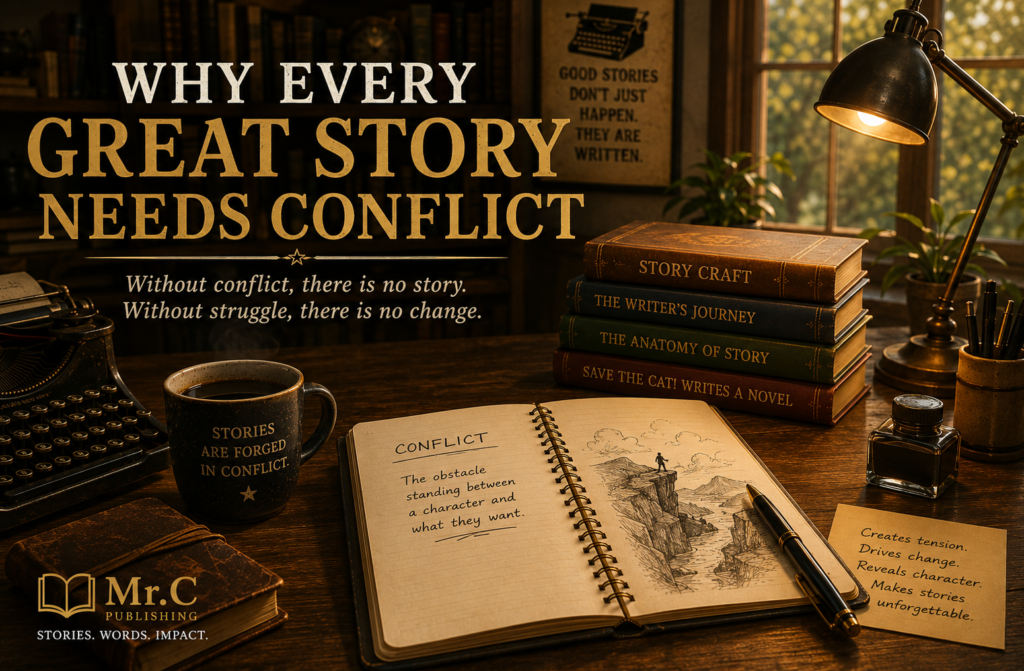
Why Every Great Story Needs Conflict
Introduction
Every memorable story has one thing in common.
Conflict.
Without it, even the most beautiful setting and the most interesting characters quickly become forgettable.
Conflict isn’t just about fights, villains, or dramatic battles.
It’s the force that keeps readers turning pages.
Whether it’s an internal struggle, a difficult decision, or a race against time, conflict creates curiosity—and curiosity is what makes stories impossible to put down.
What Is Conflict?
Conflict is the obstacle standing between a character and what they want.
It creates tension.
It forces decisions.
It drives change.
Without conflict, there is no reason for the story to move forward.
External Conflict
External conflict comes from forces outside the character.
Examples include:
- A dangerous villain.
- A natural disaster.
- Financial hardship.
- Competition.
- Society’s expectations.
These obstacles create visible challenges that readers can immediately understand.
Internal Conflict
Some of the most powerful stories happen inside the character.
Fear.
Doubt.
Regret.
Pride.
A hero who must overcome their own weaknesses often creates a more memorable journey than one who simply defeats an enemy.
Internal conflict gives stories emotional depth.

Conflict Creates Growth
Characters rarely change when life is easy.
They grow because conflict forces them to.
Every challenge teaches something.
Every setback reveals character.
Every difficult choice shapes who they become.
That’s why readers remember stories long after the plot is over.
Every Scene Needs Tension
Conflict isn’t limited to the climax.
Small moments matter too.
A disagreement.
An unanswered question.
A secret waiting to be revealed.
Even quiet scenes become engaging when something is at stake.
Too Much Conflict Can Hurt a Story
Constant action isn’t always better.
Readers also need moments to breathe.
Reflection.
Friendship.
Humor.
Hope.
The balance between tension and relief is what makes stories emotionally satisfying.
Final Thoughts
Conflict isn’t what makes stories stressful.
It’s what makes them meaningful.
Without obstacles, there are no victories.
Without uncertainty, there is no suspense.
Without struggle, there is no transformation.
The stories we remember are the ones where characters faced impossible challenges—and found a way to keep moving forward.
Recommended Reading